
Last updated November 22, 2026
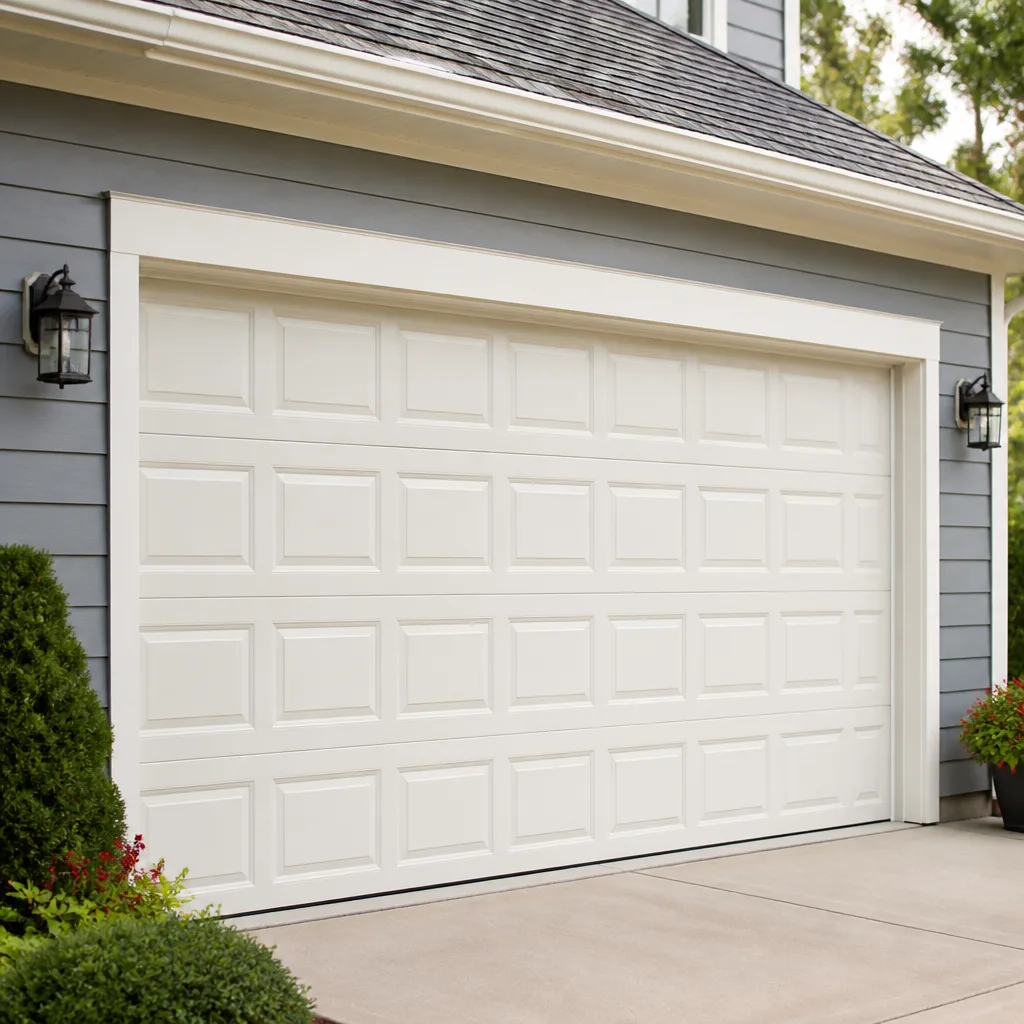 Raised-panel steel
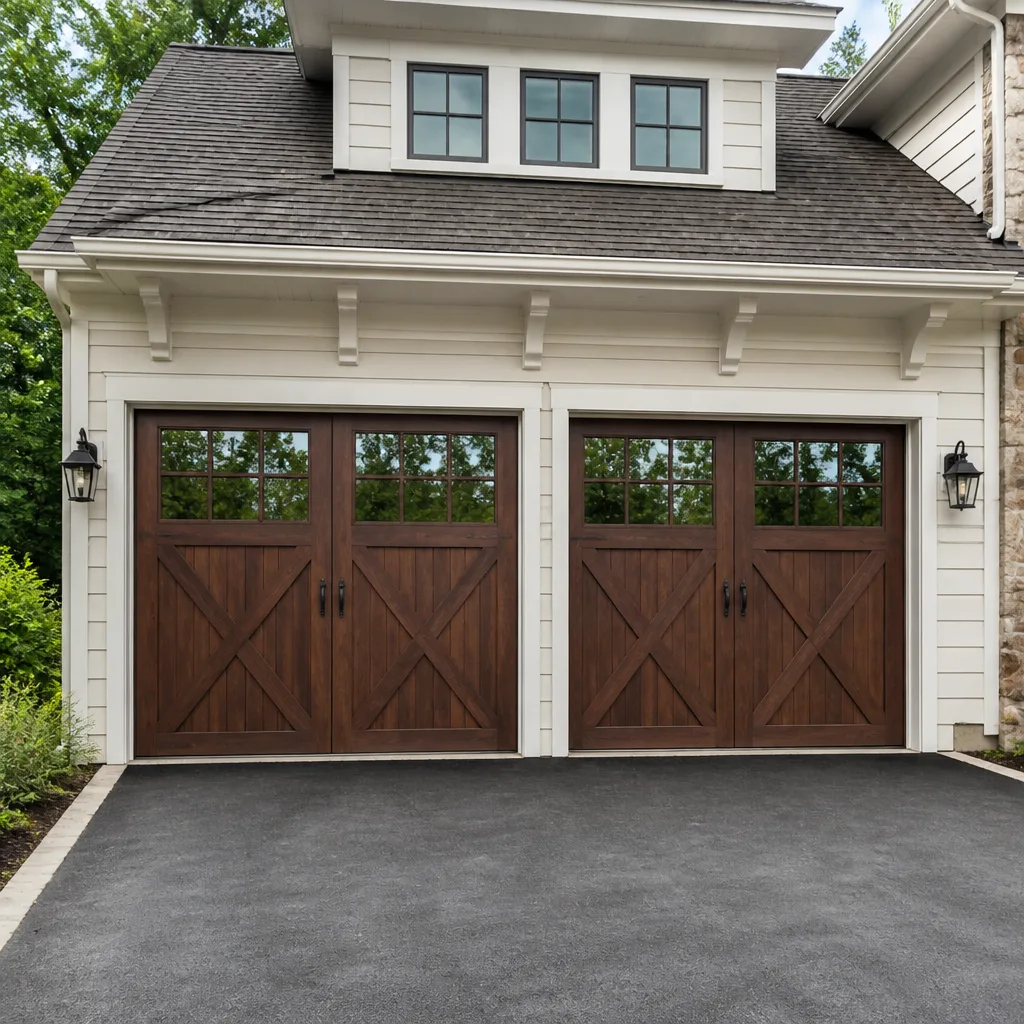 Carriage house
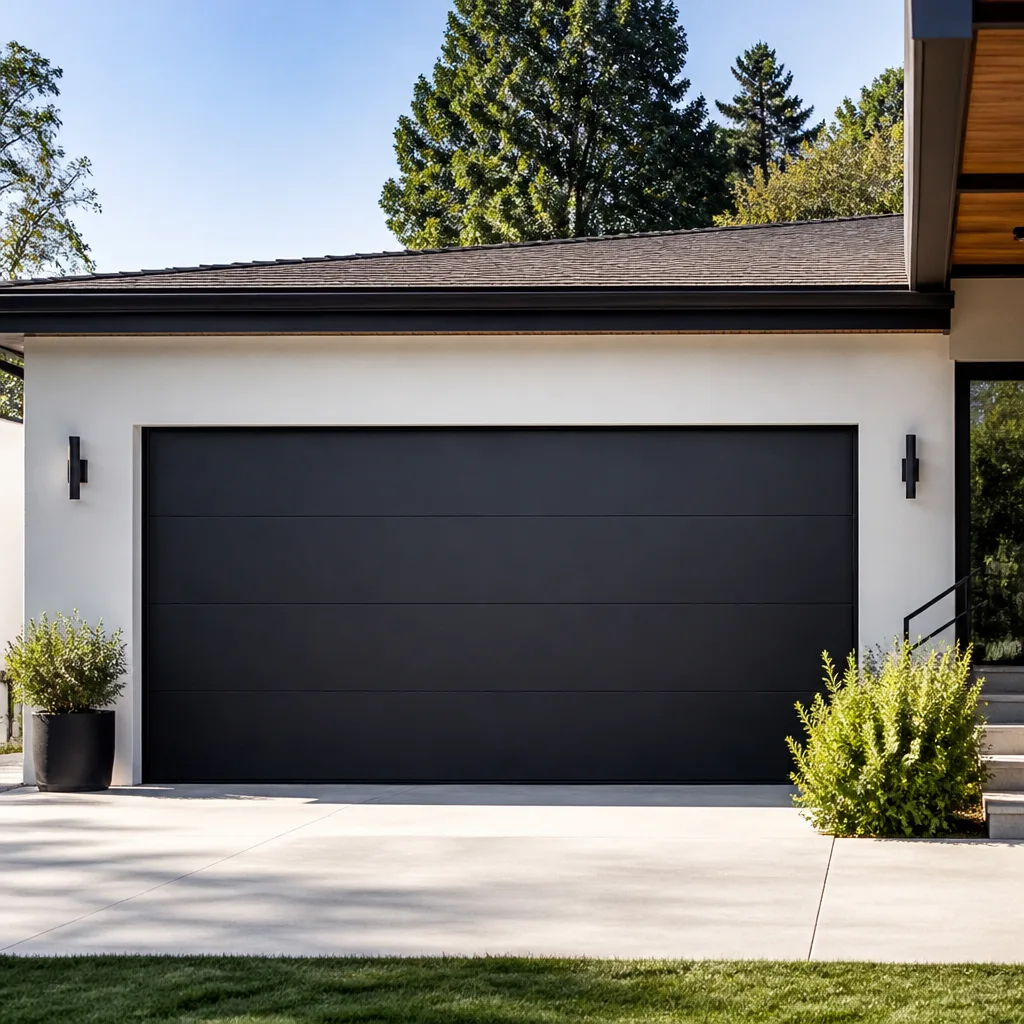 Modern flush
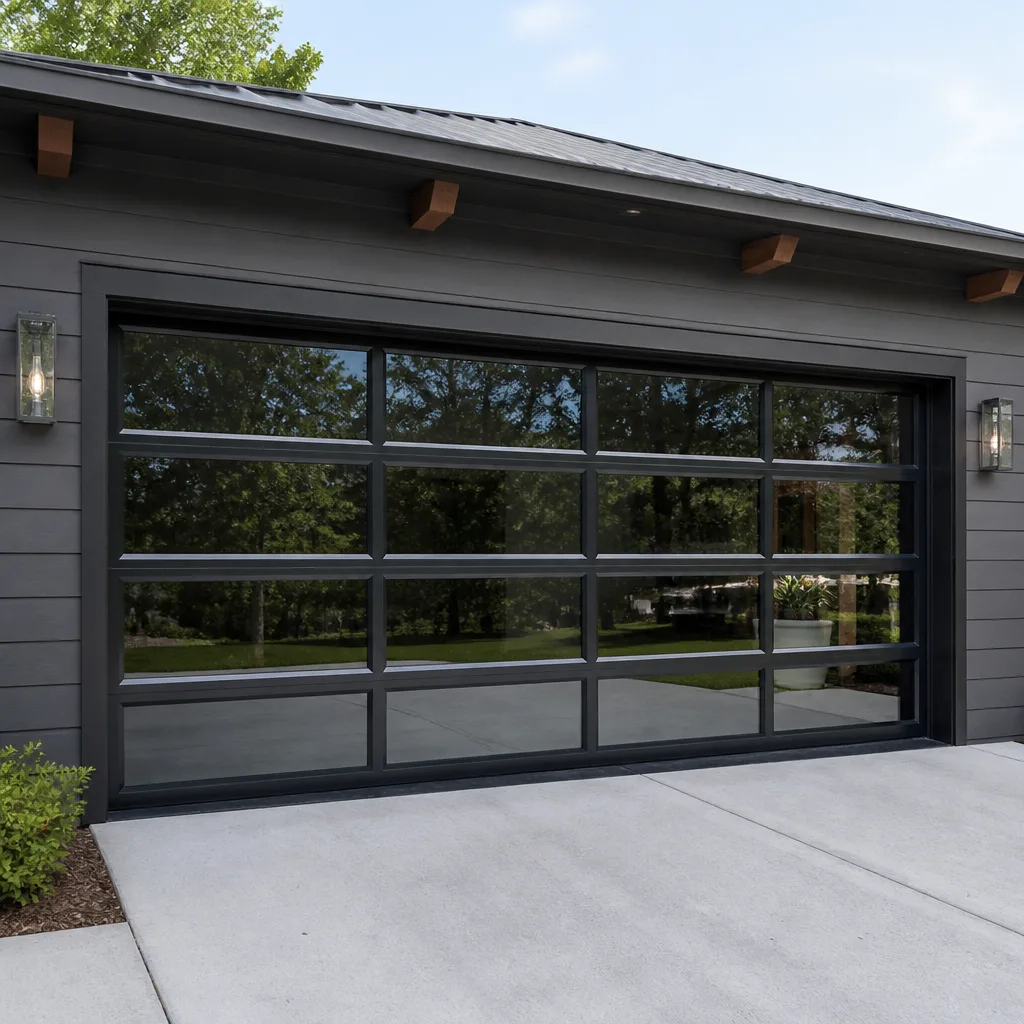 Full-view glass
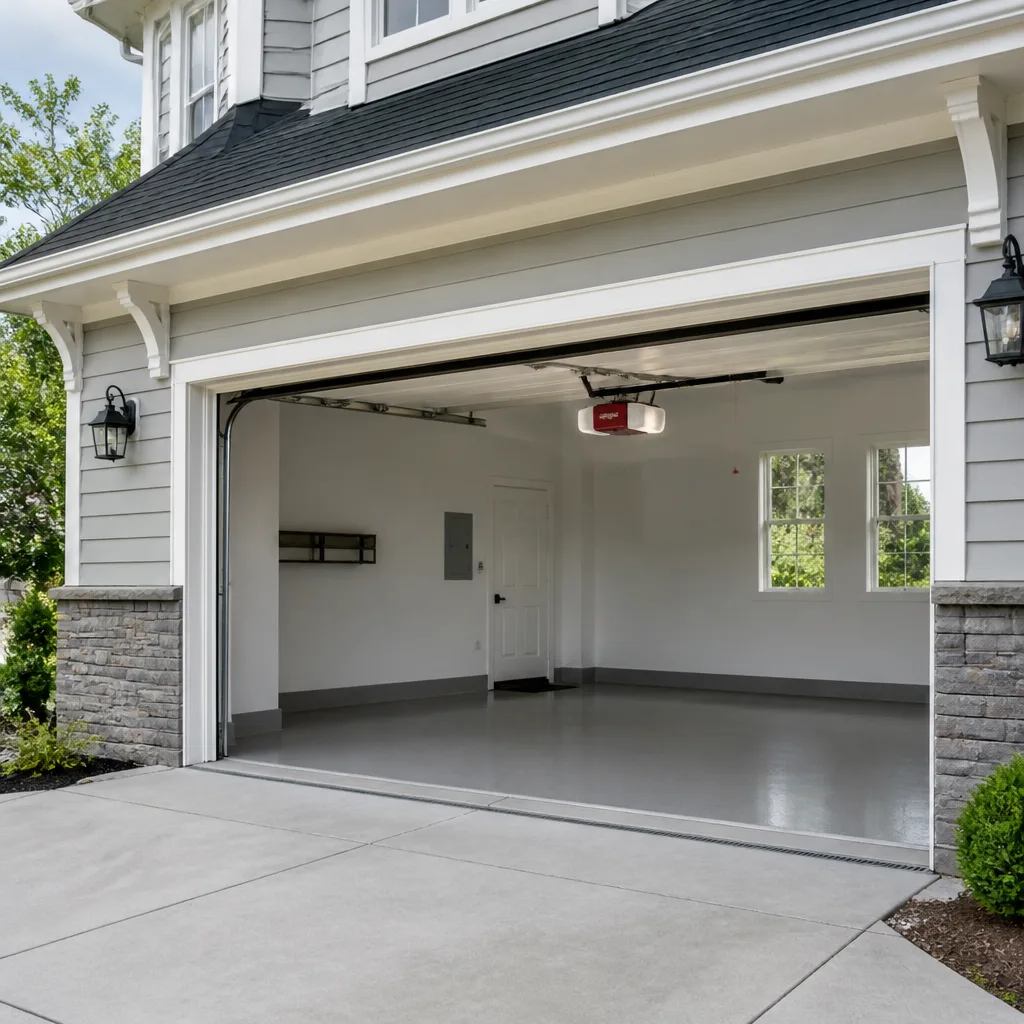 LiftMaster openers
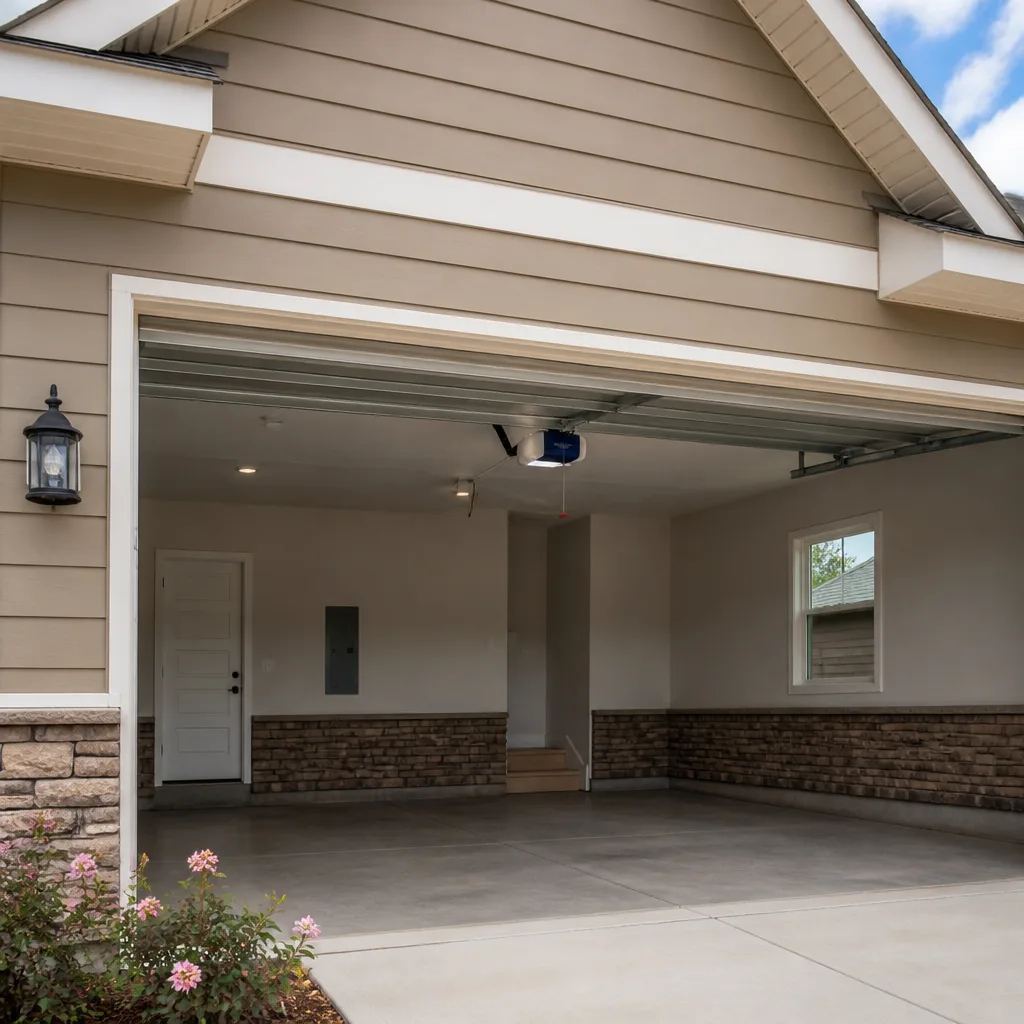 Chamberlain openers
Full 25-point door and opener safety check with every visit - springs, cables, rollers, tracks, and your LiftMaster or Chamberlain opener included
You get a price before we start. It does not change when the pro arrives.
Get your free estimateGarage Door Warning Signs: A Pungo Homeowner’s Reference Guide
Most warning-sign lists tell you what to do when the door won’t move. That’s too late. By the time a torsion spring snaps or a cable lets go, you’re already dealing with a car trapped inside, a house left open, and a repair that could have been scheduled on your terms instead of in a panic. The useful signs come earlier – the grinding that starts small, the squeal that shows up under load, the door that drifts a few inches off the ground instead of holding where you left it. This guide covers the mechanical signals a Pungo homeowner can actually hear and see, what each one points to, and which ones earn a service call.
Quick Answer
Garage door warning signs fall into four categories: unusual sounds (grinding, squealing, low thudding at the travel limits), visual cues on springs and cables (gaps, rust, fraying), opener behavior changes (slower travel, louder motor, inconsistent stopping), and balance failures you can test without touching anything high-tension. Any one of them means the door needs a professional look. Warning signs are cheap to fix. Failures aren’t.
Styles & brands we work with
- Raised-panel steel
- Carriage house
- Modern flush
- Full-view glass
- LiftMaster openers
- Chamberlain openers
Table of Contents
- The Three Sounds That Actually Mean Something
- Reading Springs and Cables Without Touching Them
- Opener Behavior Changes That Point to Mechanical Trouble
- The Mid-Travel Hold Test: Checking Balance Safely
- Environmental Warning Signs in Pungo Homes
- Seasonal Patterns We Watch For in Pungo
- Why You Never Adjust Springs or Cables Yourself
- What to Do When You Spot a Warning Sign
The Three Sounds That Actually Mean Something
A garage door makes noise. That’s normal. Rollers roll, hinges pivot, the opener motor runs. The question isn’t whether you hear something – it’s whether the sound is new, whether it’s getting worse, and where it’s coming from. In our experience across Pungo homes, three specific sounds point to specific failures and are worth naming instead of lumping into “the door is loud.”
Grinding
A grinding sound is usually a bearing problem. The center bearing plate, the end bearing brackets, or a roller bearing that has lost its grease all produce a low, rough grind that gets louder as the door moves. Left alone, a seized bearing can wear the torsion tube itself, which turns a small part replacement into a bigger repair.
Squealing Under Load
Squealing that appears as the door starts up and disappears once it’s moving points at the torsion cable or the drums. The cable is under tension, and friction against a worn drum or a dry bearing surface produces a high-pitched squeal. This one matters because a cable that’s weakened enough to squeal is a cable close to failing. Cable failure on a door that’s up can drop it hard.
The Low Thud at the Travel Limits
If the door slams into the top or bottom limit instead of easing into it, the door is off-balance or the opener’s limits are misadjusted. That thud is the sound of torque being applied to a door that isn’t carrying its own weight. It’s often the first audible sign of a spring that has lost tension or a pivot that’s binding.
Two sounds you can usually skip: a rhythmic clicking that tracks the rollers (usually just dry hinges) and a rattle from the door panels themselves (loose hardware). Both are worth mentioning at your next service but aren’t urgent.
Reading Springs and Cables Without Touching Them
Springs and cables are the parts of a garage door system that cause serious injury when handled wrong. The good news is that you can read their condition entirely by eye, standing on the floor, from a safe distance. You never need to touch them.
What to Look For on Torsion Springs
- A visible gap in the coil. A torsion spring under tension has tightly wound coils. A clean gap between coils means the spring has broken internally, even if the door is still working.
- Rust streaks along the coil. Rust is a symptom of a spring losing elasticity. A spring that has rusted and relaxed won’t hold the door’s weight for long.
- Color-coded paint flaking off the end. The paint marks identify the spring’s rated capacity. If it’s flaking badly, the spring has been cycled far beyond its expected life.
- The door sitting unevenly. One side lower than the other at rest often means one of a pair of springs has already failed and the other is holding alone.
What to Look For on Cables
- Fraying near the drum. Any cable showing individual wires splayed or broken needs replacement before the next cycle.
- Cables off the drum groove. A cable sitting on top of the drum instead of inside its track is a door waiting to drop.
- Sagging on one side. Uneven tension between the two lift cables shows as a door that looks crooked in the tracks.
If you see a gap in a spring, a frayed cable, or a cable off the drum, stop using the door. Don’t try the opener to “test it.” Leave the door where it is and call. A professional can secure the door and quote the spring or cable replacement properly.
Opener Behavior Changes That Point to Mechanical Trouble
When an opener starts acting odd, most homeowners assume the opener is failing. In our experience on Pungo doors, the opener is often the messenger, not the culprit. The motor is straining because the door has gotten heavier or harder to move. If you call for garage door opener repair and the technician diagnoses a mechanical problem instead, that’s the right call – and it’s better than replacing an opener that was working fine.
Here’s how to tell the difference:
- Slower travel. If the door takes noticeably longer to open or close than it did a few months ago, the opener is working harder against a load it didn’t used to feel. Check spring condition and hinge lubrication first.
- Louder motor noise. A motor that used to hum quietly and now grinds or whines is straining. That strain is usually coming from the door, not from the motor itself.
- Inconsistent stopping points. If the door sometimes stops short of the floor and other times closes fully, the opener’s travel limits have drifted – often because the door’s balance has changed. This is also a safety issue, because the force-reverse safety feature may not trip correctly on a door that stops in unexpected places.
- Reverse failures. Place a small object (a piece of wood, a roll of tape) on the floor in the path of the door. If the door doesn’t reverse when it meets the object, the safety reverse isn’t working. Stop using the door and call.
- Remote that only works from close range. This one usually is an opener or remote issue, not mechanical. It’s the exception.
Any opener brand is worth diagnosing before replacing. We work on LiftMaster, Chamberlain, Genie, Amarr, Wayne Dalton, Craftsman, and Raynor equipment routinely. Whatever opener is already on your wall, that’s the one to diagnose first.
The Mid-Travel Hold Test: Checking Balance Safely
A balanced door takes very little effort to move by hand because the springs are doing the work. An unbalanced door has to be forced – or drops. The mid-travel hold test is the simplest safe check a homeowner can do, because it doesn’t require touching springs or cables, only the door itself.
How to Do It
- Disconnect the opener. Pull the manual release cord (usually a red handle hanging from the opener rail) so the door moves freely.
- Raise the door by hand about halfway. Use the bottom section, not the top. Stop at the midpoint of travel.
- Let go and watch. Hold the door loosely – don’t force it to stay in place – and let it settle.
- Observe the drift. If the door holds where you left it, or drifts less than a couple of inches, the door is essentially balanced. If it drifts more than a few inches, or falls, the springs aren’t carrying the door properly.
- Reconnect the opener. Pull the release cord again to reengage the trolley.
What the drift tells you: a door that drifts downward at the midpoint has springs that have lost tension. A door that drifts upward has springs that are too strong or a cable on one side that’s too tight. Either way, the door needs service. A door that falls hard is a door that shouldn’t be used until someone has looked at it.
The test is safe because you’re not applying force. If at any point the door feels unusually heavy or you hear a popping sound, let go and step back. Call us and schedule a diagnostic. If the door won’t move by hand at all, don’t force it – just call and tell us what you’re experiencing.
Environmental Warning Signs in Pungo Homes
Pungo homes face a specific set of conditions that wear on garage door hardware in ways a door in a dry climate never does. Humid summers are the big one. That humidity works its way into every metal joint on the door: hinges, rollers, bearings, spring coils, and the track itself.
Rust Streaking on Hardware
After a Pungo summer, hinges, roller brackets, and spring coils often show a light rust film. Left alone, that rust eats into bearing surfaces and produces exactly the grinding sound described earlier. A wipe-down with a light oil-based lubricant on hinges and rollers twice a year slows this considerably.
Seal Deterioration from UV Exposure
The bottom weather seal and the side perimeter seals both take direct sun for a large part of the day in most Pungo driveways. They dry out, crack, and eventually fall apart. A seal that’s visibly cracked lets water into the doorway during a heavy rain. Replacing the seal is inexpensive and prevents damage to the door’s bottom section.
Panel Warping
Wood-composite and steel-panel doors, in particular, can warp at the panel surface when temperature swings and humidity work together. The warp shows up as a bowed panel that no longer sits flush in the track. You’ll usually notice it as a change in the gap around the door, or as a panel that binds at one corner during travel.
Track Splitting and Hardware Loosening
The screws and lag bolts that hold the track to the door jambs vibrate loose over time, and Pungo’s seasonal temperature swings accelerate that. A track that’s sagged by even a quarter inch will bind a roller. Twice a year, walk around the inside of the door and hand-check that the track is tight and plumb.
Seasonal Patterns We Watch For in Pungo
The warning signs a Pungo homeowner should check scale with the season, and knowing the pattern helps you time preventive checks.
- Spring (early): Check balance after winter. Cold snaps stress torsion springs, and a spring that’s been sitting at reduced tension for months will show up in the mid-travel hold test. Check the bottom seal for cracks from frozen ground contact.
- Late spring: Look for wasps and other nesting activity inside the opener housing and around the door brackets. A nest in the opener rail can block the trolley. Don’t spray the opener itself – call for a professional inspection.
- Summer: This is when rust streaks and seal cracking become obvious. Wipe down hinges and rollers with a light lubricant. Check that the opener housing isn’t overheating (usually shows as a motor that stops partway through a cycle and then works again after a rest).
- Fall: Check the track and hardware after the summer’s heat expansion and contraction. Test the safety reverse. Look at the spring coils for any new gaps.
- Winter: Cables can freeze to the drums in rare cold snaps. If the door is stiff on the first cycle after a cold night, don’t force it – open it by hand a few inches and listen.
If you handle a few of these checks on your own schedule, you’ll catch most warning signs early. For anything involving the springs or cables, save it for a professional – more on that below.
Why You Never Adjust Springs or Cables Yourself
Torsion springs store an enormous amount of energy. A door spring carries the entire weight of the door – typically a couple hundred pounds or more – so an injury from a released spring or a snapped cable is serious, and in some cases fatal. This is not the part of the door to save money on.
Two things to know:
- The danger zone is the spring and its winding bars. Adjusting tension requires winding bars and specific knowledge of how the spring is wound. Doing it wrong can release the spring violently. Even experienced general handymen avoid this work. A garage door specialist handles it as routine.
- Cables are under the same tension as the springs. A cable under load can whip when released. Cutting a cable “to relieve tension” is dangerous. Never do it.
What you can do safely:
- Lubricate hinges, rollers, and tracks with a light oil-based spray.
- Run the mid-travel hold test.
- Check the safety reverse with a small object in the door’s path.
- Check the bottom seal and perimeter seals.
- Hand-tighten loose fasteners (but not the spring or cable hardware).
- Wipe down rust streaks.
When we handle spring work on a Pungo door, we use professional-grade winding bars, hold the door safely during replacement, and rebalance after. That’s a different job from a homeowner with a pair of pliers and a YouTube video.
What to Do When You Spot a Warning Sign
Not every warning sign is an emergency, but the response is the same in the sense that you should keep the door in place and call. Here’s the honest breakdown:
These Are Stop-Using-The-Door Signs
- A visible break or gap in a torsion spring
- A cable off the drum or visibly frayed
- A door that falls when released during the mid-travel test
- A door that doesn’t reverse when it meets an obstruction
- The door hanging crooked in the track
For these, call us and leave the door alone. We handle emergency garage door service for urgent security and access situations. Call (855) 683-7570. We answer 24/7. Fast dispatch from 7am to 7pm, Sunday through Friday.
These Are “Book Service Soon” Signs
- Grinding or squealing that’s new but the door still works
- Opener slowing down or getting louder
- Visible rust on hardware or seals
- Door drifts more than a couple of inches during the mid-travel test but doesn’t fall
- A door that thuds at the travel limits
These aren’t emergencies, but they shouldn’t sit for months. A bearing that squeals today is a bearing that seizes tomorrow. For scheduled garage door repair, we can usually get a technician out soon, diagnose the issue with a written estimate before any work starts, and fix it in one visit.
These Are “Preventive Check” Signs
- A door that’s louder than it was a year ago but otherwise works fine
- Seals that show minor cracking at the edges
- Any door that hasn’t had a professional tune-up in a while
We’re happy to look at these on a routine service call. The point of catching warning signs is to avoid the panel replacement, cable failure, or new-door conversation that follows a full failure.
Common Mistakes to Avoid
- Ignoring a new sound because the door still works. The door working today isn’t evidence that it’ll work tomorrow. Grinding and squealing sound like cosmetic issues and behave like a countdown.
- Over-lubricating the track. Track surfaces should stay mostly dry – lubricant gathers grit, and a gritty track binds rollers. Lubricate the rollers and hinges, not the track. In a Pungo summer, that grit turns into a paste.
- Assuming the opener is failing when the door is the problem. Many a Pungo homeowner has replaced a perfectly good opener to fix a strain that was really coming from a failing spring. Diagnose the mechanical side first.
- Trying to fix a broken spring yourself. We’ve heard every version of “I just watched a video.” Springs carry the full weight of the door. Don’t do it.
- Skipping the safety reverse test. This takes five seconds with a roll of tape. It’s the single cheapest safety habit for a Pungo homeowner and the one most often skipped.
- Forgetting about seasonal humidity. A door that runs fine in the dry months can bind in the humid ones. Pungo homes in particular benefit from an early summer check on hinges, rollers, and springs.
- Letting a seal go another year. A cracked bottom seal lets water into the door frame. The replacement cost is small; the panel repair cost from a wet door frame is not.
See the difference
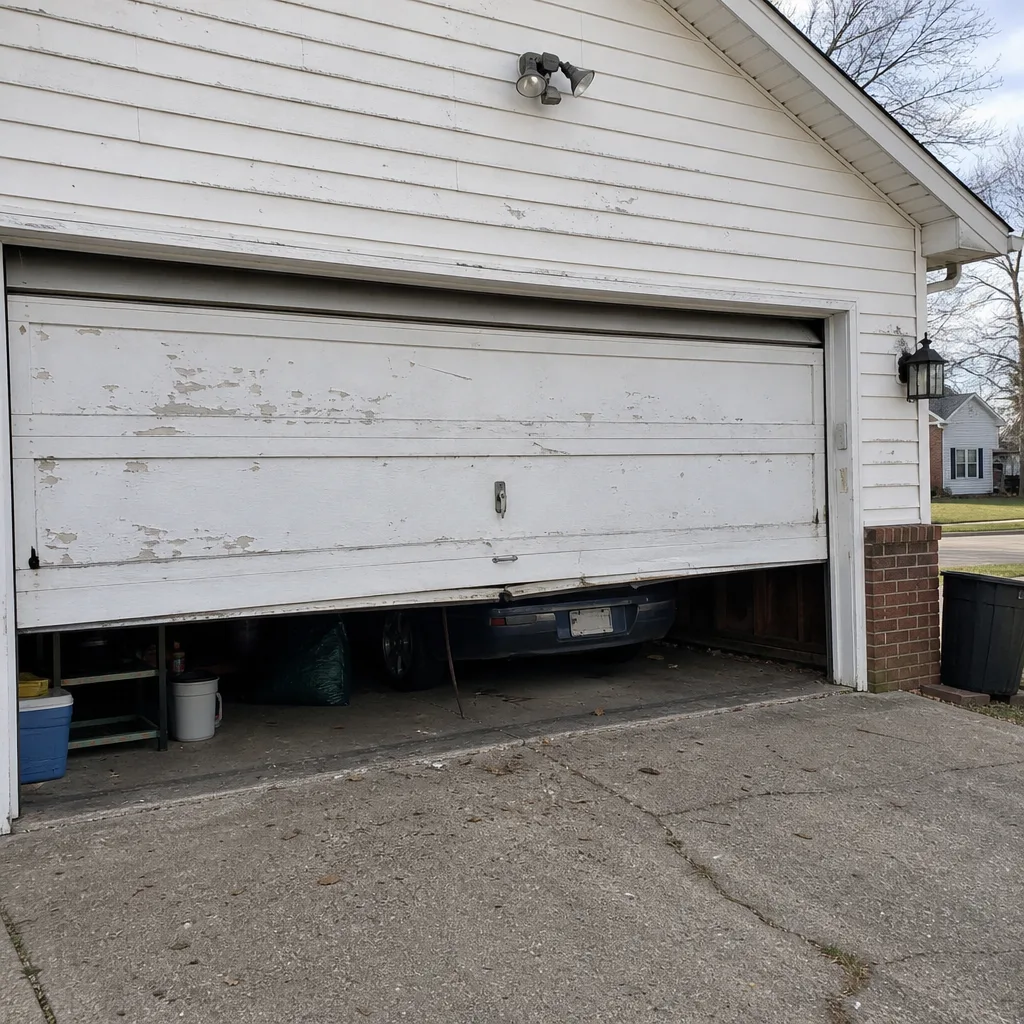 Before
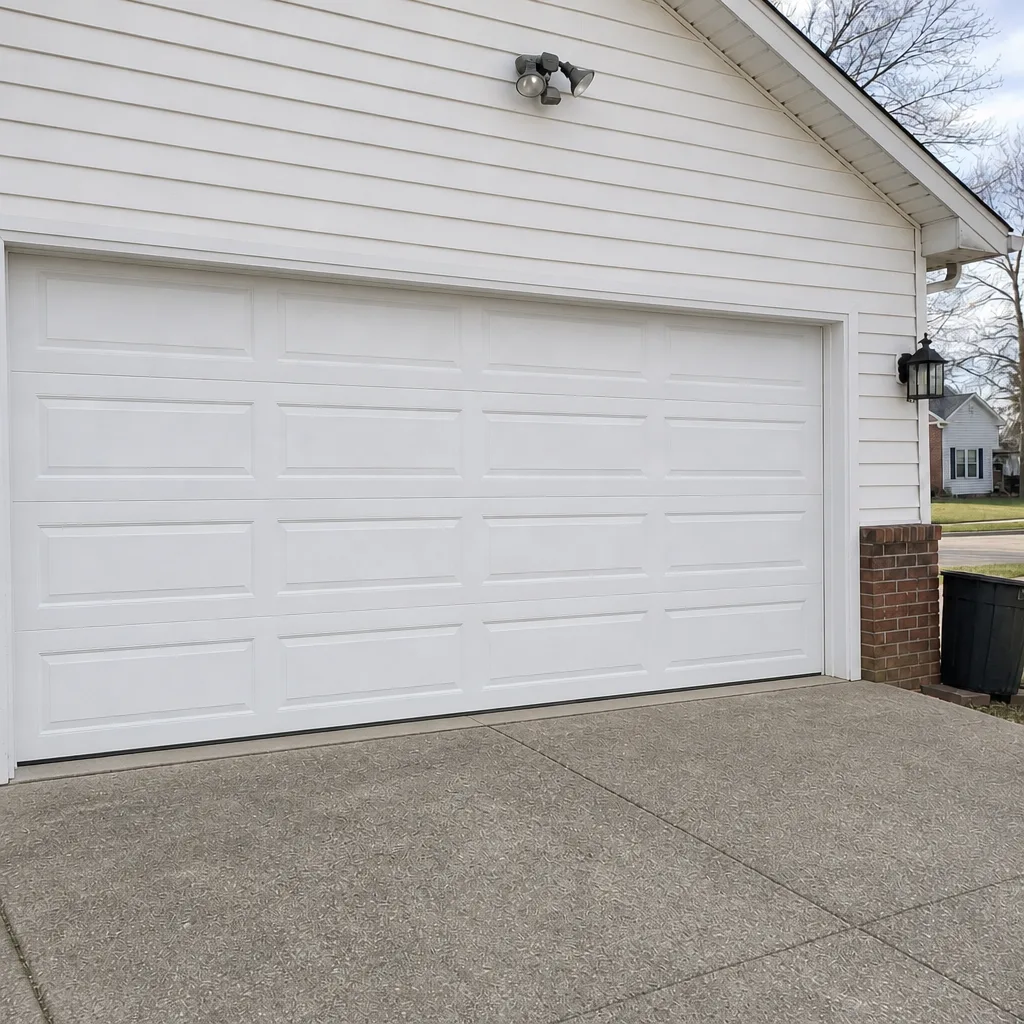 After
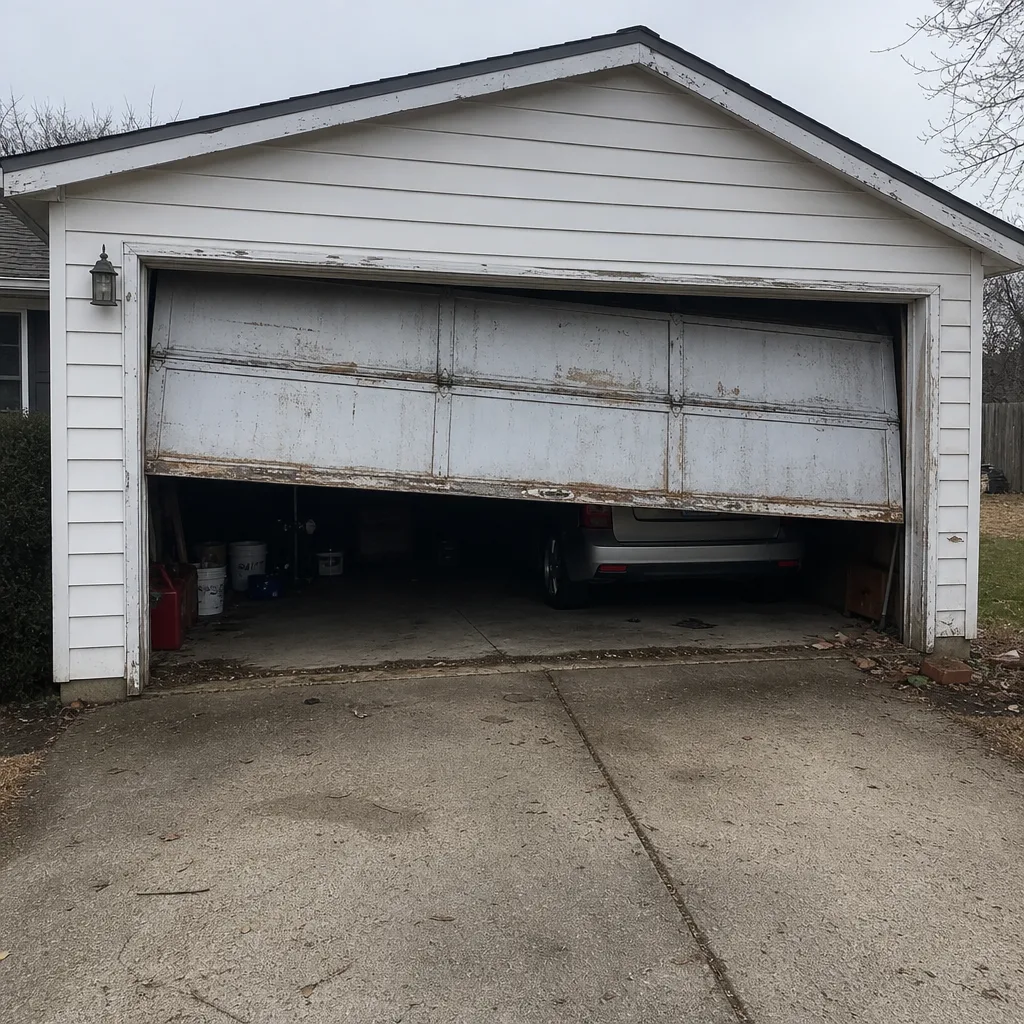 Before
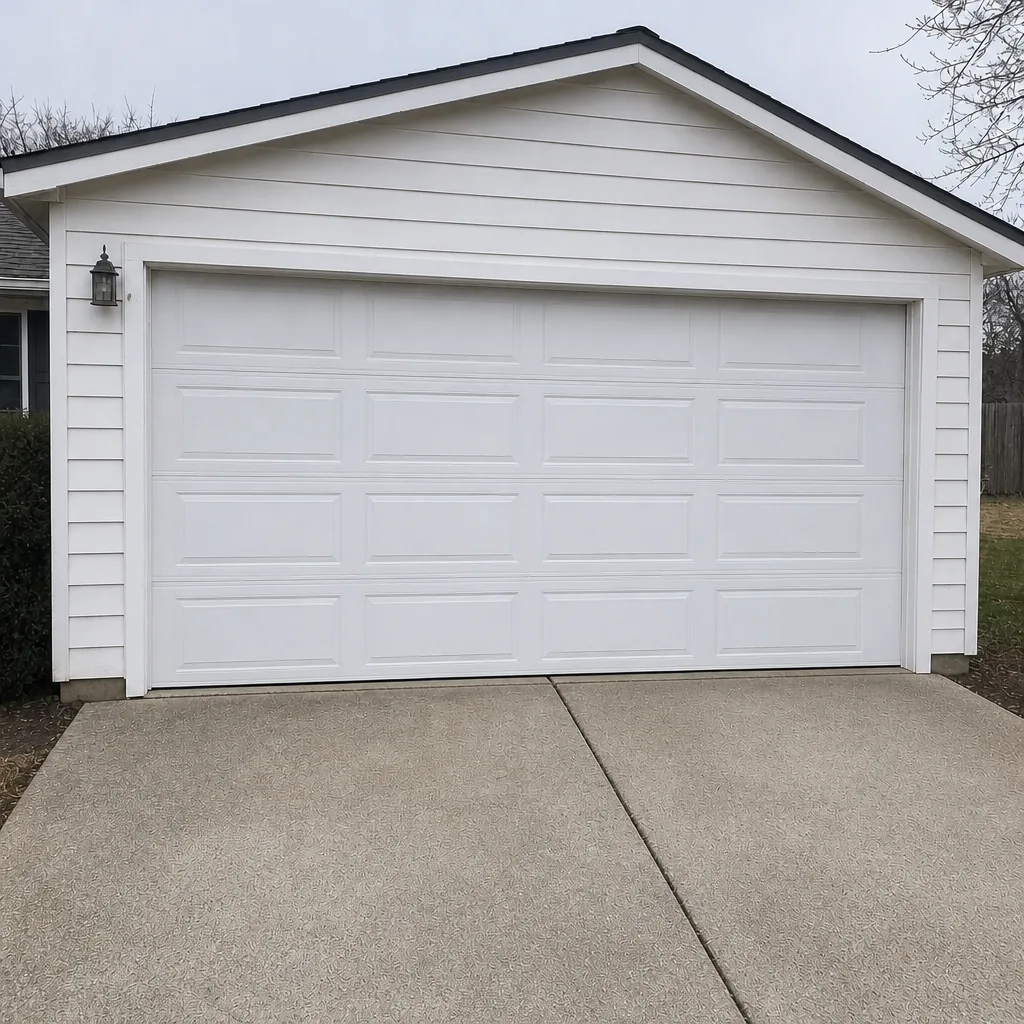 After
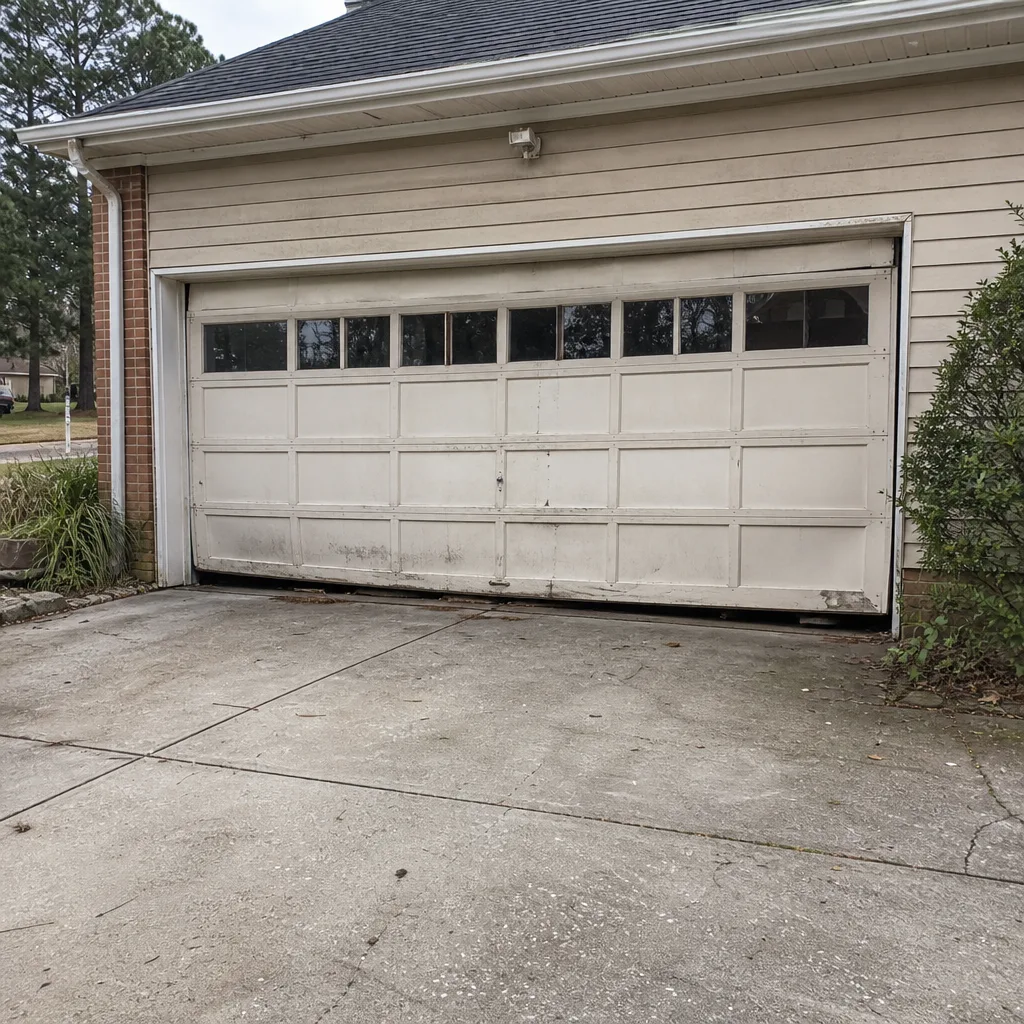 Before
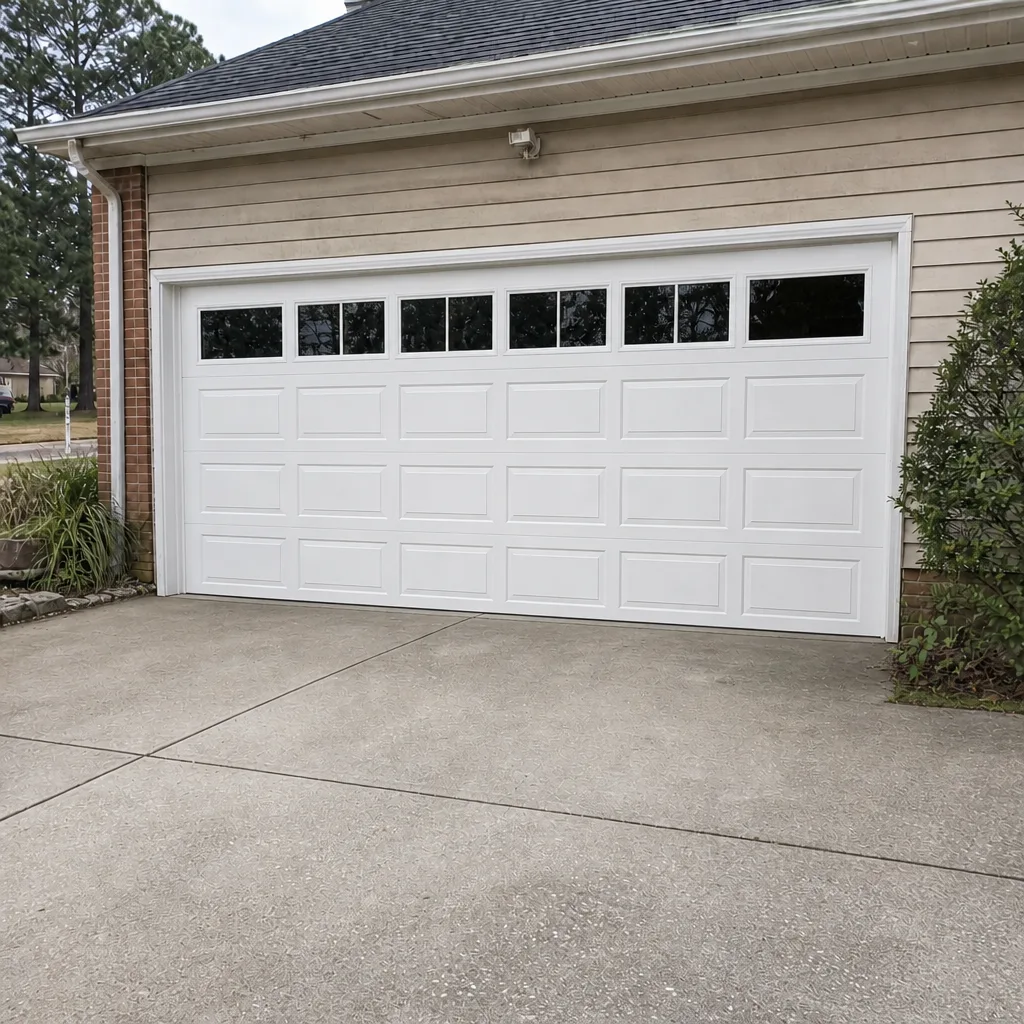 After
When to Call a Professional
Call a professional when you hear any of the three warning sounds discussed above, when you spot a spring or cable issue, when the safety reverse doesn’t work, when the door drifts during the mid-travel test, or when the opener has started behaving differently. Call sooner if the door is stuck open, stuck closed, or hanging crooked. For a new door rather than a repair, garage door installation is scheduled work – we measure, quote in writing, and schedule the install, so there’s no same-day promise but there is a firm price before anything is ordered.
Garage Door Repair Pungo offers free estimates in Pungo – call (855) 683-7570. We answer 24/7. Fast dispatch from 7am to 7pm, Sunday through Friday. The price is set per job by a written estimate and agreed with you before any work starts, so you know exactly what you’re paying before we touch the door.
Frequently Asked Questions
The most reliable sign is a visible gap in the spring coil, followed by rust streaking and a door that no longer holds its own weight in the mid-travel test. Any one of these means the door needs professional evaluation before it cycles again. Call (855) 683-7570 for a free estimate in Pungo.
Yes. Grinding is a bearing problem, and it gets worse, not better, with cycles. A bearing that squeals or grinds today will eventually seize the torsion tube and stop the door completely. It’s cheaper to fix now than to fix it after the door won’t move. Call (855) 683-7570 for an estimate.
Louder in humid weather is common in Pungo because humidity causes oxidation and swelling at metal contact points, but “normal for the season” isn’t the same as “fine.” If the noise is new this summer, lubricate hinges and rollers, then listen again. If it’s still grinding or squealing, call us and let a specialist diagnose it. Estimates are free.
Yes – the mid-travel hold test is safe to do from the floor. Disconnect the opener, raise the door halfway by hand, and let go. If it drifts more than a couple of inches, the door is off-balance and needs service. If it falls, don’t use the door until a technician looks at it. Call (855) 683-7570 for an appointment.
Not necessarily. A slow opener is often straining against a door that’s gotten harder to move – a sign of failing springs, dry hinges, or a sagging track. The opener is a symptom, not always the cause. Call (855) 683-7570 and we’ll diagnose whether the issue is the door, the garage door opener repair itself, or both.
Estimates are free. We look at the door, diagnose the issue, and give you a written price before any work begins. The price is set per job by that written estimate and doesn’t change once the quote is agreed. Call (855) 683-7570 for an estimate.
Leave the door where it is if you can secure the opening (a clamp or a wood shim against the track can hold it temporarily), then call. A door stuck open is a security risk and shouldn’t be forced. Call (855) 683-7570 – we answer 24/7 and can book emergency service for the next dispatch opening. Fast dispatch from 7am to 7pm, Sunday through Friday.
A basic check – sound, seal, balance test, safety reverse – takes about ten minutes and is worth doing twice a year, once in spring and once in fall. Pungo humidity makes the summer check particularly useful. For Garage Door Repair Pungo service or to schedule a professional inspection, call (855) 683-7570. Estimates are free.
The Bottom Line
Garage door failures don’t usually happen out of nowhere. Springs fail after weeks of sounding different. Bearings seize after months of grinding. Doors drift and thud before they drop. The homeowner who knows what to listen for catches a spring failure as a scheduled repair. The one who doesn’t catches it as an emergency call with a car trapped inside. Pungo homes face specific seasonal wear – humid summers on metal, sun on the seals, cool snaps on the springs – and the two-check-per-year routine in this guide catches most of it before it becomes a bigger repair. If any of the warning signs in this guide sound familiar on your own door, call us. The estimate is free and the diagnosis is straightforward.
Call (855) 683-7570 for a free estimate. We answer 24/7. Fast dispatch from 7am to 7pm, Sunday through Friday. Our technicians have up to 8 years of experience, we work across all the major door and opener brands including Amarr, Wayne Dalton, Craftsman, and Raynor, and the price is set per job by a written estimate agreed before any work starts.
Written by the team at Garage Door Repair Pungo.